Publisher Fightback: Google Hands News Outlets a Shield Against AI Traffic Slumps
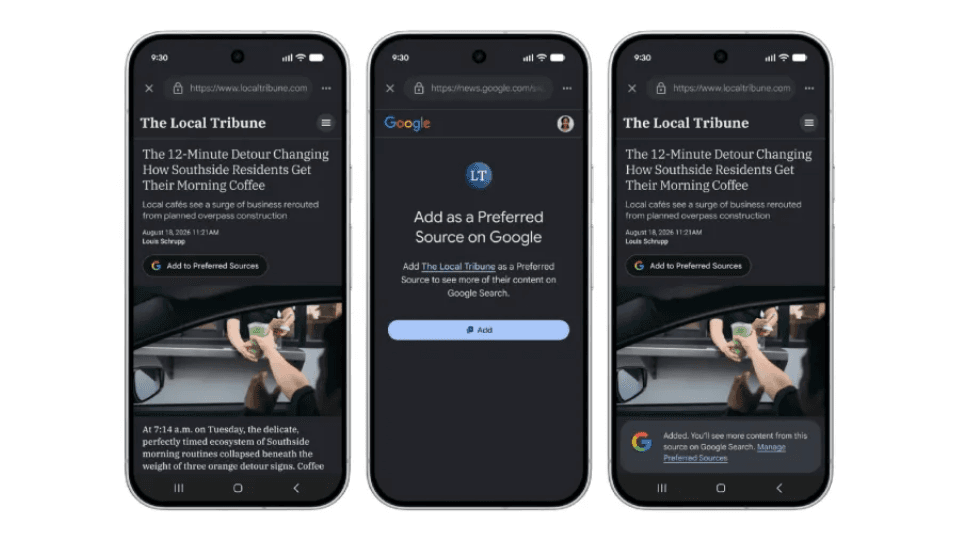
Google released a new embeddable button on Thursday designed to help online publishers win back reader traffic. As AI summary tools cut down traditional website clicks, this new Preferred Sources button lets news sites ask visitors directly to mark them as a favorite news outlet across Google Search, Google Discover, and Google News.
Adding the button to an article page gives readers a one-click option to prioritize content from publications they trust. When readers set a site as a preferred source, Google highlights stories from that outlet across its search ecosystem, giving those articles better placement inside standard search results and AI-generated overviews.
This embeddable button builds on a feature Google first introduced back in May. During that initial launch, Google added preferred source tags inside Top Stories and its experimental AI search views. Since then, readers across the web marked over 345,000 unique publications as preferred sources, showing strong user interest in customizing news feeds.
Beyond clicking embedded buttons on publisher websites, readers can manually search for and select preferred outlets by visiting Google’s dedicated source preferences page. Internal studies from Google indicate that readers are twice as likely to click on article links coming from sources they explicitly marked as favorites.
By handing publishers an embeddable tool, Google attempts to soften the damage caused by its expanding AI search features. Automated summaries often answer user questions right on the search page, preventing readers from clicking through to original news articles. Giving outlets a direct way to build loyal audiences inside Google feeds offers a small lifeline to traffic-dependent digital newsrooms.
For digital marketing teams and editorial managers, placing these buttons in prominent site locations becomes a key distribution strategy. Prompts placed at the top of breaking news stories or embedded inside weekly opinion pieces encourage readers to lock in their preferred source status immediately. Once a reader confirms that choice, search algorithms continuously pull that publisher’s updates into the reader’s personal feed, creating a steady stream of returning web traffic without relying solely on social media algorithms.
Alongside the publisher button, Google is testing new controls for its mobile app feeds. Users will soon be able to customize their Google Discover feed using simple conversational commands. Tapping the three-dot menu on any story opens a prompt where readers can tell Google in plain English what topics they want to see more or less of in real time.
Android owners will also receive natural language controls to tweak their daily audio news updates inside the Google News application. This shift mirrors a broader industry trend toward user-directed content algorithms, giving everyday readers more say over what appears on their screens.
While custom feed options help readers keep track of trusted outlets, online publishers still face steep uphill battles against automated search overviews. Building a direct connection with readers through preferred source buttons offers a way to preserve incoming traffic, but newsrooms must keep pushing readers toward direct subscriptions and email newsletters to survive long-term algorithm shifts.
Giving creators better tools to capture reader intent creates a healthier online publishing ecosystem. When platforms balance automated answers with direct access to primary sources, quality journalism stands a much better chance of reaching the audience it deserves.