Red Tape and Robots: China Kills Meta’s $2 Billion Manus AI Deal
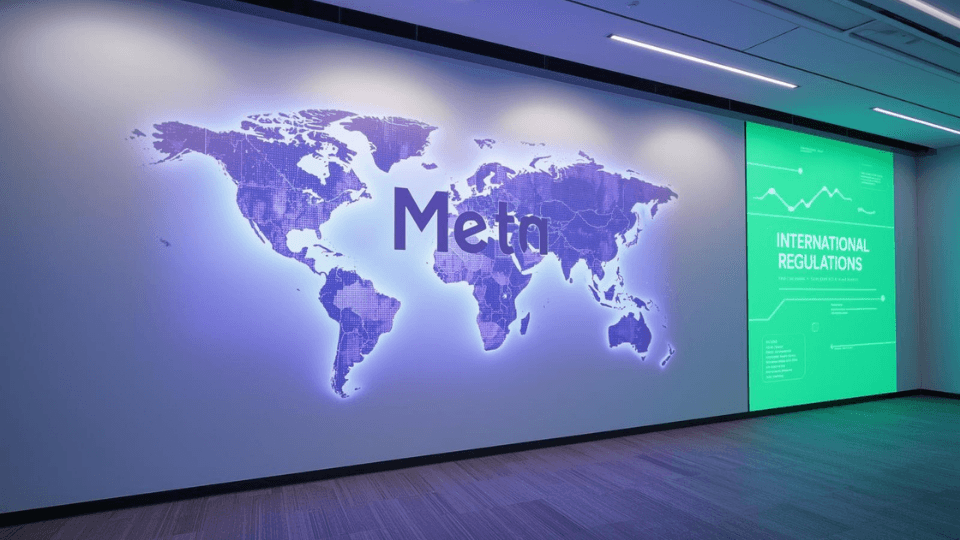
The high-stakes race for AI agents just hit a massive geopolitical wall. On Monday, China’s top economic planner, the National Development and Reform Commission (NDRC), officially blocked Meta’s $2 billion acquisition of Manus. This move is a major shock to the system. It marks one of the most aggressive interventions by Beijing in a cross-border tech deal. Manus is an “agentic” AI startup founded by Chinese engineers who moved their headquarters to Singapore last year, but China still claims authority over the company’s tech and talent.
Mark Zuckerberg scooped up Manus late last year to give Meta AI a massive boost. While chatbots like ChatGPT are great at answering questions, agentic AI like Manus can actually do work. It can browse the web, write code, and finish multi-step tasks without a human holding its hand. For Meta, losing this deal is a serious blow. They were counting on this technology to turn their apps into autonomous digital employees. Now, they have to figure out how to unwind a deal that they already started integrating into their own systems.
A Messy Divorce in Progress
China’s NDRC did not give a long list of reasons for the veto. They simply stated that the foreign investment was prohibited under their laws and ordered both parties to cancel the transaction immediately. But the situation on the ground is a total mess. Around 100 Manus employees have already moved into Meta’s offices in Singapore. The founders have already taken on executive roles and started reporting directly to Meta COO Javier Olivan.
Even worse for the team, Manus CEO Xiao Hong and Chief Scientist Yichao Ji are reportedly under exit bans. This means that while their company is now owned by an American giant, they are trapped inside mainland China. They cannot leave the country while regulators finish their review. A Meta spokesperson told the press that the deal complied fully with the law and that they expect a fair resolution, but Beijing’s order to “unwind” the deal suggests they aren’t looking for a compromise.
Why China is Putting Up a Fight
The fight over Manus is about more than just one company. Beijing is worried about a “hollowing out” of its technology base. Manus grew out of a Chinese startup called Butterfly Effect before moving to Singapore to attract global investors like Benchmark Capital. China sees this as a “conspiratorial” attempt to move valuable intellectual property to the United States. In the eyes of the NDRC, letting Meta buy Manus is the same as letting a geopolitical rival steal a head start in the AI war.
Washington is also watching this deal with a suspicious eye. Senator John Cornyn has raised concerns about American capital flowing into firms with such deep ties to China. It is a rare moment where both the U.S. and China seem to agree that this deal is a problem, though for very different reasons. For the startup world, this is a chilling warning. It shows that if you start a company in China, the government may never truly let you go, no matter where you move your headquarters.
Unwinding a $2 billion deal that has already closed is a nightmare. Meta might have to spin the company off to a new buyer or sell it back to its original investors. In the meantime, the talent that Meta fought so hard to get is stuck in a legal limbo between two superpowers. This veto shows that in the world of high-tech AI, the law of the land matters just as much as the quality of the code.